Oil pollution in the Black Sea
Most often, the slicks are due to discharged bilge water contaminated with oil, marine fuel, chemicals and heavy metals.
Oil pollution in the Black Sea
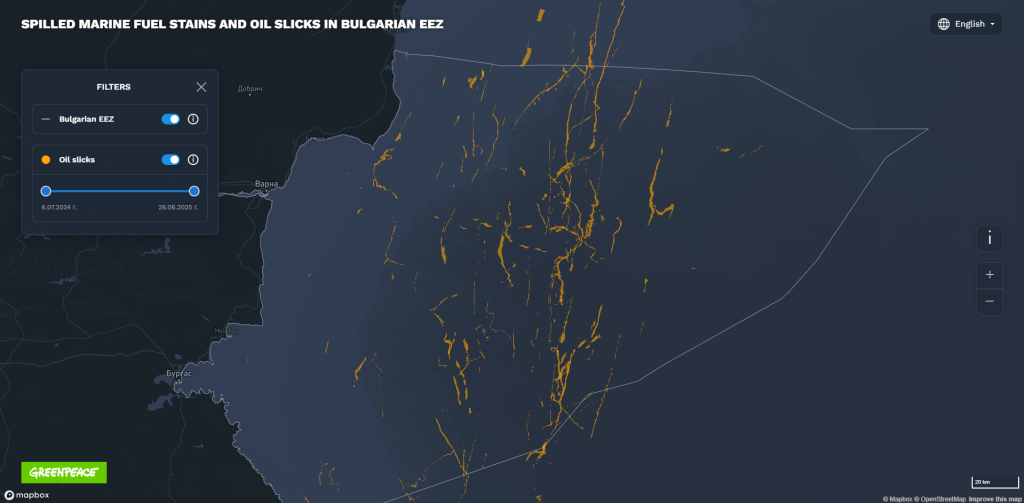
Over 170 oil and marine fuel slicks have been recorded in the Bulgarian Black Sea within a year. This is according to an investigation by Greenpeace Bulgaria, summarized in a new interactive map. The total area of the detected spills is 819.1 square kilometers – an area that is almost twice the size of the city of Sofia and exceeds the size of all the beaches on the Bulgarian Black Sea coast combined. The SkyTruth Cerulean system, which uses satellite data from the European Space Agency’s Sentinel-1, was used to detect the oil slicks.
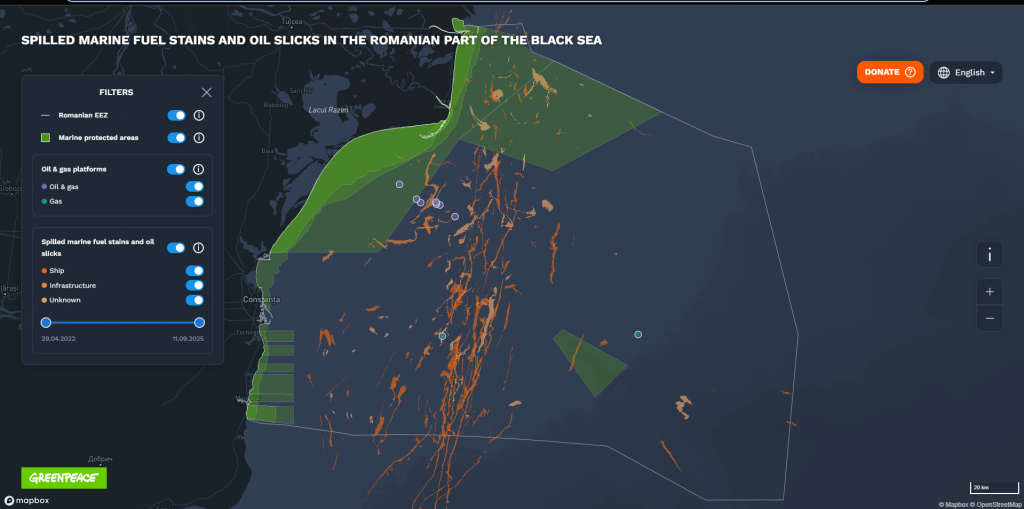
Greenpeace Romania, in partnership with SkyTruth, also launched an interactive map showing the extent of oil and fuel spills in the Romanian part of the Black Sea.
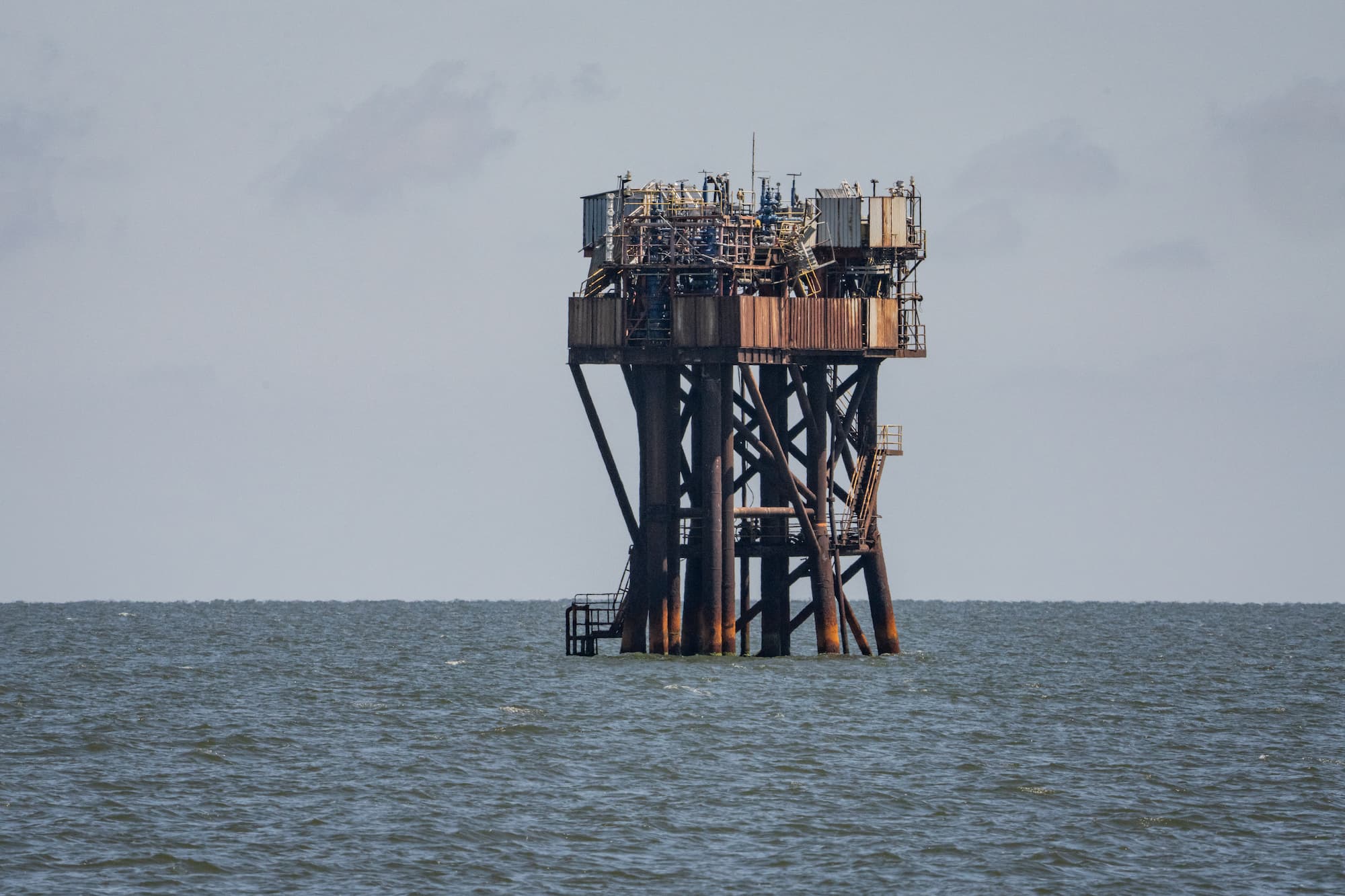
Between April 29, 2022, and September 11, 2025, 226 oil spills were identified on the sea surface, covering a total area of 1,308 km², equivalent to approximately 5.5 times the area of Bucharest. Of these, 55 patches, totaling 162 km², appeared in protected areas, and 11 patches, with a total area of 112.8 km², can be attributed potentially to offshore oil and gas infrastructure. The overall picture is alarming: almost straight trails expose spills from moving ships along the main shipping corridors to and from the Bosphorus Strait, while wavy patches, following the wind and currents, appear in the vicinity of oil and gas infrastructure.